 Floss
Floss
A Magazine for Your Mouth
Everything your dentist wishes you already knew.
Illustrated guides for the rest of us.
No appointments. No judgment. Just good information.
Two minutes, twice a day — but most of us are doing it wrong.
The angle matters more than the pressure. Point bristles at 45° toward the gumline — not perpendicular to the tooth. You're cleaning the margin where plaque actually hides, not polishing the enamel surface.
Soft-bristle brush, pea-sized fluoride toothpaste
Two quadrants per minute — set a timer once
Small circular strokes, not horizontal scrubbing
"Brushing harder doesn't clean better — it just wears down your gums. The bristles do the work; your job is to aim them."
Key Takeaway
Flossing isn't about removing food. It's about removing the biofilm that lives between your teeth.
Plaque is soft and invisible. You can remove it with floss — but only if the floss curves into a C-shape around each tooth and slides just below the gumline.
"If your gums bleed when you floss, that's inflammation — not fragility. It usually stops within two weeks of consistent flossing."
What bleeding means
That sharp cold sting has three likely causes — and two of them are fixable at home.
Sensitivity happens when the dentin layer of your tooth is exposed — through enamel erosion, gum recession, or a cracked tooth. Only the third one needs an immediate call to a dentist.
Enamel erosion
Switch to low-acid diet, use remineralizing toothpaste
Gum recession
Softer brush, gentler technique, time
Cracked tooth
Call your dentist this week
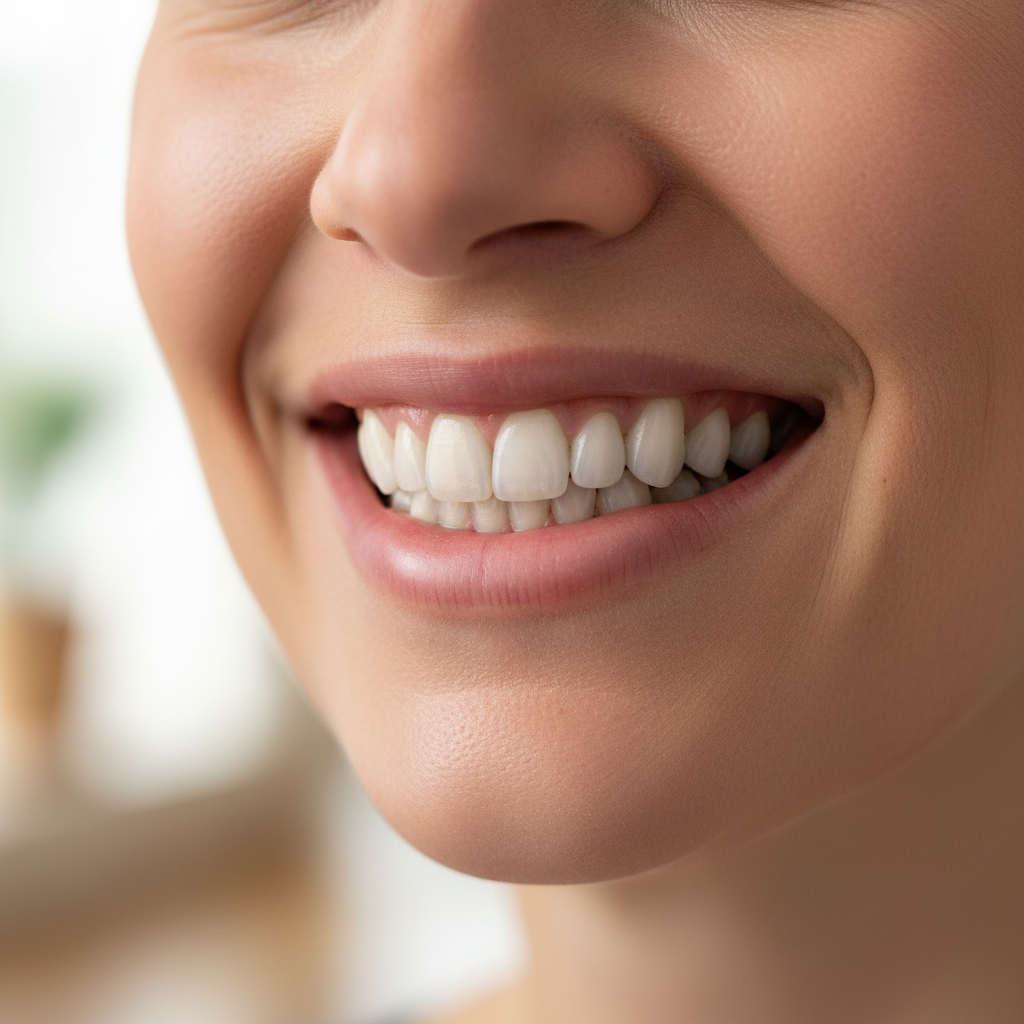
Whitening works — but not the way the packaging describes it.
Peroxide-based whiteners bleach the organic molecules inside enamel. Charcoal, baking soda, and "activated" strips mostly abrade the surface — which removes stains but also removes enamel you cannot grow back.
Carbamide peroxide 10–22%, worn for 30–60 min
Hydrogen peroxide strips — some effect, slow
Charcoal toothpaste — abrasive, no bleaching
Your retainer is the last inch of a two-year investment.
Teeth move throughout your life. After braces or aligners, the periodontal ligaments that hold teeth in place are stretched and unstable for up to a year. The retainer holds them while the bone remodels around the new position.
Wear nightly, indefinitely
Not just for one year — for as long as you want straight teeth
Clean with mild soap, not toothpaste
Toothpaste is abrasive; it scratches the plastic and harbors bacteria
Store in its case
Most retainers are lost in napkins, or destroyed by dogs
"Forgetting your retainer for two weeks doesn't undo two years of treatment — but a month of forgetting might. The good news: it's reversible if you catch it early."
Key Takeaway
One guide, every Friday morning.
Each issue covers one topic in full — with diagrams, plain language, and no upselling. Written for people who want to understand, not just be told what to buy.
3,200 readers. No ads. Unsubscribe anytime.
Send me the guide.
No spam. Just one genuinely useful email per week.
I am...